

October 7, 2026
DEA’s National Prescription Drug Take Back Day is October 24, 2026. For members of the public, this is an opportunity to safely dispose of unwanted medications. Studies have shown that abuse of drugs found in the home is a common contributor to substance use disorder.
But for you and other DEA registrants, the event is a reminder that your controlled substance disposal and destruction protocols and requirements are vastly different. And failing to stay within the regulations can be costly.
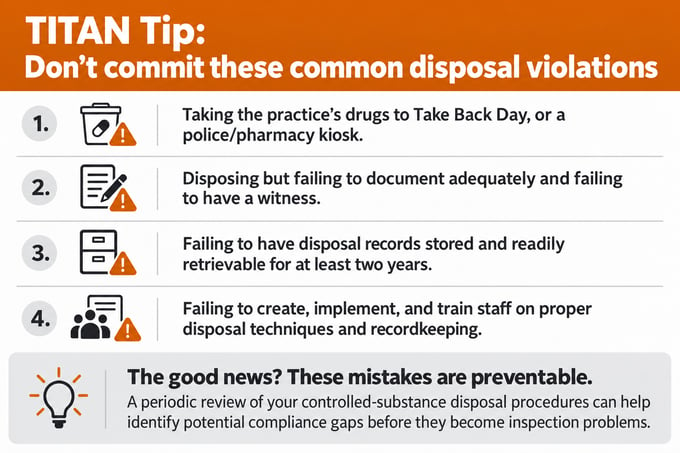
Take Back Day Is Not for You
If your practice or pharmacy owns expired, damaged, unwanted, or otherwise unusable controlled substances one of the most common misconceptions is that you can simply drop them office at a local Take Back Day collection site.
No.
These events are designed for the public (non-registrants) to dispose of eligible medications—your disposal requirements, methods, and recordkeeping requirements are entirely different.
Stay Away from Kiosks
What about the drug collection kiosks at your local pharmacy or police department?
Nope.
While these seem to be ideal – permanent, always available, easy to access, located everywhere – they are off limits to DEA registrants for drug disposal for the same reasons that drug take back events are non-usable.
It’s All About the Waste and the Records
Proper disposal isn't simply a matter of getting unwanted controlled substances out of your facility. Here are the basic principles of disposal and destruction in the Controlled Substances Act you need to keep in mind:
- Any destruction method – whether done by a vendor or done by you in-house – must render the drugs irretrievable.
- Everything must be witnessed and recorded, the information staying in your records for at least two years.
Here’s what it means on a day-to-day operational basis:
- All wasting (such as the leftover liquid in a syringe after a drug administration or the few drops remaining in a vial) must be done so that the substance is irretrievable. There are numerous destruction receptacles and products to help you do this. Titan Group does not recommend washing the substance down a sink drain because of the eventual environmental impact.
- Wasting requires that a record be kept. These “wasting logs” should records all relevant information such as drug name, strength, and dosage form (such as liquid); quantities wasted; date/time; method of disposal; reason for the wasting; and signatures of the waster and a witness.
Depending on your unique circumstances, you may need to use a DEA-registered reverse distributor in order to eliminate your unwanted medications. These companies can help you with all required recordkeeping, drug packaging, pickup or shipping, and destruction in a “one stop shopping” manner.
Document, Document, Document
DEA regulations cover not only the transfer, disposal, and destruction of controlled substances, but they also detail the use of the DEA Form 41 (“Registrant Record of Controlled Substances Destroyed”). Found on the agency’s website (deadiversion.usdoj.gov), the Form 41 is your official destruction record and must remain in your files for at least two years.
Failure to have the Form 41 and other destruction information readily retrievable during a DEA inspection of your practice results in noted violations, possible civil fines, and a LOT of questioning about what happened to the controlled substances under your care and control.
Is Your Disposal Process Inspection-Ready?
Think about how you would answer these essential disposal questions:
- Do we have controlled substances that need destruction? Are they in a secure location to prevent diversion by employees?
- Are we using a DEA-compliant disposal method?
- Are our disposal and destruction records complete and accurate?
- Do our procedures clearly identify who is responsible for controlled-substance disposal?
- Could we produce the required documentation if DEA inspected our records tomorrow?
If you aren't completely confident in the answers you come up with, don't wait until a DEA inspection to try and figure it all out – call TITAN Group now.
TITAN's Experts are Ready. TITAN Group’s team of experienced former DEA personnel and compliance experts can help your practice or pharmacy with a comprehensive blend of inspections, training, documentation analysis, and supporting technology to correct current problems and stave off future ones.
Have worries or questions about your controlled-substance disposal methods or your DEA compliance program overall? Contact us today to schedule a consultation, or take our FREE risk assessment test. Let TITAN ensure your organization handles unwanted controlled substances the right way—before a compliance item becomes an inspection nightmare.
Tag(s):
Articles